Born: 1913 Cēsis, Russian Empire
Died: 2002 London, England
Year of Migration to the UK: 1949
Biography
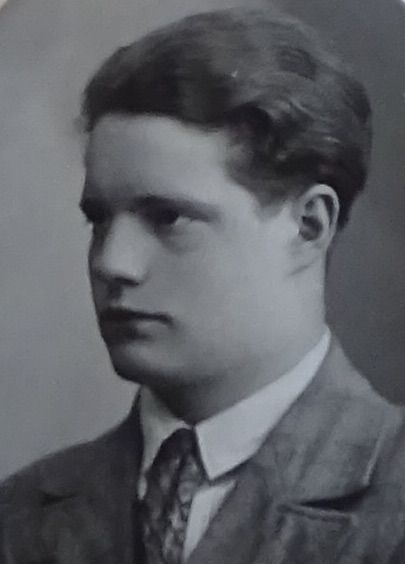
Painter Arnolds Mazītis was born on 18 July 1913 in Cēsis, a historic town in the Vidzeme region of Latvia, then part of the Russian Empire. His interest in art emerged early, while still attending secondary school. He simultaneously enrolled in the painting department of Riga Municipal Technical School, where his teachers included J. Ansons, A. Brastiņš, P. Kondziņš, A. Veilands, and K. Zmdaga. In 1933 he was admitted to the Latvian Academy of Arts, where he studied drawing under Professors Augusts Annuss and Kārlis Miesnieks, and painting under Professors Valdemārs Tone, K. Ubāns, and Ģederts Eliass. While at the Academy, Mazītis participated in several exhibitions organised by the Latvian Cultural Fund and in several exhibitions of the Mūksala artists' association from 1936. Although his studies were interrupted by a period of compulsory military service, in 1941 he completed the figurative painting master class. He was a member of the Zaļā Zeme (Green Land) student union of the Academy, founded in 1933, which organised eight exhibitions between 1933 and 1940. In 1944, as Soviet forces re-occupied Latvia, Mazītis left for Germany, where he lived first in Märbeke, before moving between displaced persons camps. Mazītis married Aina Jansone in 1938, they had two daughters, Ieva and Anna. In 1949 he immigrated to the UK and settled in London. In 1955 he married the opera singer, Gaida Trēziņa, who taught singing from their home. For a period Mazītis supported himself as a technical draughtsman of clock face designs, while continuing to paint.
Mazītis worked principally in portraiture, still life, and the nude, with occasional landscapes, usually glimpsed through a window rather than observed outdoors. His technique drew on Renaissance practice: he prepared canvases carefully; built up layers of paint, using both brush and palette knife; employed glazing, and constructed controlled contrasts of warm and cold tones to create spatial depth and atmosphere. The painter and critic, Juris Soikans observed that he did not paint objects but light, noting that 'the presence of objects in a painting is needed only to show the effect of painterly elements upon them' (Latvju Māksla, 1978). The quality Mazītis sought in his work was characterised by the critic, Margarita Ausala as a 'vibration of light', neither the high contrast of a cellar light nor the even brightness of full daylight, but the oscillating light of dusk and dawn that Ausala associated with the landscape and lyric tradition of Vidzeme. Mazītis was himself unequivocal in his rejection of pure abstraction, arguing in 1963 that it was neither new nor original and could not resolve the broader problems of painting. The relationship between his formation in the Latvian painterly tradition and his long residence in Britain gave his work a duality: rooted in the technical and aesthetic values of the prewar Latvian Academy, yet produced in the context of postwar London.
In the early years of the London Latvian exile community, he organised solo exhibitions in London, Brighton, and Leicester. In 1950 his portrait, Girl with a Beret (Meitene ar bereti) was accepted into the Summer Exhibition at the Royal Academy of Arts, London, and was subsequently selected to represent England in a companion exhibition of the best work shown in Britain that year, held in Brighton. In 1954 he participated in a portrait exhibition organised by The Observer newspaper. He held further solo shows in Toronto, Canada in November 1968; in Toronto and Hamilton in 1972; a retrospective held during the Latvian Song Festival days in Leicester in 1972; and in Montreal, Canada in 1973. He also participated in exhibitions held within the European Latvian diaspora, including at the First Congress of Latvian Cultural Workers in Münster, West Germany in 1962, the First European Latvian Song Festival in Hamburg, West Germany in 1964, and subsequent Latvian Song Festivals. These exhibitions typically comprised approximate 50 artworks and attracted collectors from both Latvian and non-Latvian communities. By 1973 his work was represented in four London commercial galleries, including Eric Estorick.
On 10 November 1977 Mazītis was awarded the Krišjānis Barons Prize of the Cultural Fund of the World Free Latvian Congress for outstanding achievement in the visual arts, specifically painting. On 22 July 1993 the Latvian Academy of Arts conferred an honorary professorial diploma. In 1994, works from the 1930s, including Portrait of Ina, Lady Ina in White from Ķegums, and two self-portraits were shown at a memorial exhibition of the Zaļā Zeme association at the Arsenāls Museum of Art in Riga, marking the first public presentation of his work in Latvia since the postwar period.
Arnolds Mazītis died in London, England on 15 September 2002. His work is not currently represented in the UK public domain. The Ben Uri Research Unit welcomes contributions from researchers or family members who might have further biographical information on the artist.
Michal Mel
Related books
- Laimonis Mieriņš, 'Arnolds Mazītis 18.07.1913-15.09. 2002', Brīvā Latvija: Apvienotā Londonas Avīze un Latvija, 12 October 2002
- Jānis Kalnačs, 'Kara ziņotāju darbība - viena no tiešākām laikmeta izpausmēm nacistiskās Vācijas okupētās Latvijas mākslā', Latvijas Zinātņu Akadēmijas Vēstis. A daļa 1 April 2002
- Velta Sniķere, 'Arnolds Mazītis Latvieši Lielbritānijā', Brīvā Latvija: Apvienotā Londonas Avīze un Latvija, 8 August 1998
- Ilze Konstante, '"ZAĻĀS ZEMES" Piemiņas Izstāde "Arsenālā", Māksla 1 January 1995
- Maira Ādmine, 'Gaisma no gleznām', Neatkarīgā Cīņa 15 June 1994
- Austra Liepiņa, 'Gaismu un ēnu mākslinieka Arnolda Mazīša 80 gadu mija', Brīvā Latvija: Apvienotā Londonas Avīze un Latvija, 9 August 1993
- A., 'Gleznotāja gadskārta', Londonas Avīze, 15 July 1983
- Juris Soikans, ,Arnolds Mazītis Kultūras Fonda Kr. Barona Balvas Ieguvējs, Latvju Māksla, 1 January 1978
- M.D., 'Arnolds Mazītis Atkal Kanadā Toronto', Laiks, 18 April 1973
- A.L., 'Latviskais Mākslinieks', Latvija Amerikā, 4 August 1973
- A.A., 'Gaismas Gleznotājs', Londonas Avīze, 5 October 1973
- Margarita Ausala, 'Dzivā Gaisma Atzinās un Noskaņas, Starp Gleznotāja Arnolda Maziša Audekliem Kavējoties', Londonas Avīze, 24 September 1971
- Juris Soikans, 'Glezniecības kultūra', Ceļa Zīmes, 1 January 1970
- Juris Soikans, 'Glezniecības kultūra', Latvija Amerikā, 2 November 1968
- P. Aigars, 'Arnolds Mazītis Pārkāpj Pusmūža Slieksni', Londonas Avīze, 19 July 1963
- [N.A], 'Londonā Gleznotāja Darbnīcā', Tilts, 1 May 1958
Related web links
Selected exhibitions
- Zaļā Zeme Memorial Exhibition, Arsenāls Museum of Art, Riga, Latvia (1994)
- Solo exhibition, Montreal, Canada (1973)
- Group exhibition, Latvian Song Festival, Cologne, Germany (1973)
- Solo exhibition, Leicester, Leicestershire (1972)
- Solo exhibition, Toronto and Hamilton, Canada (1972)
- Group exhibition, Latvian Song Festival, London (1972, 1967, 1958)
- Solo exhibition, Toronto, Canada (1968)
- Group exhibition, First European Latvian Song Festival, Hamburg, Germany (1964)
- Group exhibition, First Congress of Latvian Cultural Workers, Münster, Germany (1962)
- Group exhibition, The Observer Children's Portrait Exhibition, London (1954)
- Solo exhibition, Brighton, Sussex (1950-1955)
- Summer Exhibition, Royal Academy of Arts, London (1950)
- Group exhibitions, Zaļā Zeme student association, Latvian Academy of Arts, Riga, Latvia (1933-1940)
- Group exhibitions, Latvian Cultural Fund and Mūksala Artists' Association, Latvia (1936)
Ben Uri archive
Consult items in the Ben Uri archive related to [Arnolds Mazitis]
Ben Uri library
Publications related to [Arnolds Mazitis] in the Ben Uri Library