Born: 1869 Melbourne, Australia
Died: 1930 London, England
Year of Migration to the UK: 1897
Biography
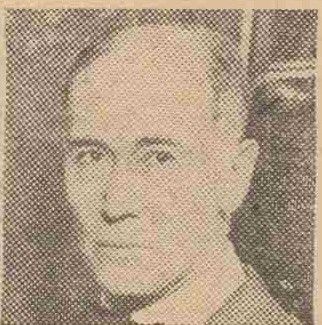
Artist George Coates was born on 9 August 1869 in Melbourne, Australia. He studied at St James’s Grammar School and was apprenticed at Ferguson and Urie, where he honed his design and craftsmanship skills. He subsequuently trained at North Melbourne School of Design and later took evening drawing classes with Frederick McCubbin at the National Gallery School, where he quickly gained recognition for his draughtsmanship. He then moved between shared studios in Melbourne, at times living with artists, Lionel Lindsay and Hugh McLean. He also ran his own drawing classes in his Swanston Street studio, mentoring students such as Max Meldrum, Norman and Percy Lindsay, and George Bell. In 1895, Coates advanced his studies under L. Bernard Hall, adopting Munich School techniques that shaped his style. The following year, he won a travelling scholarship, allowing him to continue his training abroad.
In 1897, Coates moved to Paris to study at the Académie Julian under Jean Paul Laurens and Benjamin Constant. During this time, he reconnected with fellow artist, Dora Meeson, whom he married in 1903, after relocating to London. In fashionable Chelsea, Coates and Meeson became integral members of a vibrant community of Australian expatriate artists. To support themselves, they contributed illustrations to publications, such as Dr H. S. Williams's Historians’ History of the World and the Encyclopaedia Britannica. Coates gained international recognition when his work was exhibited 'on the line' at the Old Salon in Paris in 1898 and 1899; he also recieved an honourable mention at the Old Salon in 1910 and further recognition at the Royal Academy exhibitions between 1903 and 1925. In 1913, he was elected an associate of the New Salon, later attaining full membership in 1927. In 1920 he was awarded a Diploma of Honour at the Grand International Exhibition in Pittsburgh, USA, where he showed a painting of Miss Strubelle, an American singer.
These accomplishments led to numerous commissions, and Coates soon established himself as a sought-after portraitist in London. His sitters included prominent military figures, such as Lord Northcote, General Sir Neville Smyth, Captain Albert Jacka—the first Australian Victoria Cross recipient— and General Griffiths. His painting Arthur Walker and his brother Harold (1912) remains one of his most distinguished works, exemplifying his keen sensitivity to character. Active in various artistic circles, Coates was a member of the Chelsea Arts Club, the International Society of Sculptors, Painters, and Gravers, and the Royal Society of Portrait Painters. He was also involved in the founding of the London Portrait Society. He held honorary memberships of the Royal Society of Arts in Sydney and the Victorian Artists of Australia. Additionally, he served on the council of the Royal Portrait Society in London and was an associate of the Société Nationale des Beaux-Arts (New Salon) in Paris. During the First World War, Coates enlisted in the Territorial Royal Army Medical Corps, serving as an orderly at the 3rd London General Hospital. This experience shaped his wartime portraits, capturing military resilience and character. Rising to the rank of sergeant, he was discharged in 1919, due to ill health. Though never an official war artist, he received numerous commissions to portray Australian and Canadian military personnel.
From 1921–22, Coates and Meeson returned to Australia, where they worked on commissions for the Australian War Memorial and held exhibitions in several cities. Exhibiting across the country, their works were acquired by the National Galleries of Australia. Coates' exhibitions in his homeland were well received and his painting of the last Australian wounded soldier to leave England was acquired by the Sydney Gallery. Despite the rise of modernist movements, his work remained firmly rooted in realism, with an emphasis on meticulous execution and subtle tonal harmonies. Coates' contribution to portraiture was widely respected, and his work continued to receive accolades; his later commissions included Lady Forbes-Robertson, Mrs. Winfred Wavell, and Miss Olive Lethbridge. Reflecting on Australian art, he believed the country’s talent was emerging independently from English influences, and he observed a growing assertion of Australian national identity in its art, distinguishing it from British artistic traditions. He also noted the potential for fresco painting to flourish in Australia's dry climate (The Registrer 1921), while Meeson promoted fresco painting in Melbourne, giving lectures and demonstrations on the technique.
George Coates died in Chelsea, London on 27 July 1930. A memorial exhibition of nearly 200 paintings and drawings was held in 1931 at the New Burlington Galleries, opened by Lord Birdwood. In 1937 Meeson wrote Coates: His Art, His Life, chronicling her husband’s artistic journey and legacy. His work is held in UK collections, including Tate, Manchester Art Gallery, West Northamptonshire Council, and the British Museum.
Irene Iacono
Related books
- Myra Scott, The Art of George James Coates, 1869-1930 and Dora Meeson Coates, 1869-1955, (Melbourne: Melbourne University Press, 1992)
- Frances Spalding, 20th Century Painters and Sculptors (Suffolk: Antique Collectors Club Ltd, 1991), pp. 121-122
- ‘An Artist’s Life Story’, Liverpool Daily Post, 17 March 1937, p. 7
- Paintings and Drawings by the Late George James Coates (Melbourne: Athenaeum Gallery, 1934)
- ‘George James Coates’, The Argus, 8 May 1934, p. 9
- Memorial Exhibition: Paintings & Drawings by the Late George James Coates (London: New Burlington Galleries, 1931)
- 'George Coates. A Memorial Exhibition', The Argus, 4 July 1931, p. 10
- ‘An Australian Painter’, Truth, 27 May 1931, p. 20
- ‘George Coates. An Appreciation’, The Argus, 1 August 1930, p. 8
- ‘George Coates’, Register, 29 July 1930, p. 8
- ‘George Coates’, Sydney Morning Herald, 29 July 1930, p 9
- ‘George Coates’, The Argus, 25 February 1928, p. 8
- ‘Notable Artists’ Return’, The Register, 23 September 1921, p. 7
Public collections
Related organisations
- Académie Julian, Paris (student)
- Chelsea Arts Club (member)
- International Society of Sculptors, Painters, and Gravers (member)
- London Portrait Society (co-founder)
- New Salon (member)
- Royal Society of Portrait Painters (member)
Related web links
- Australian War Memorial
- British Museum Entry
- National Portrait Gallery, Australia
- Richard Haese, ‘George James Coates
- Royal Academy of Arts, online resources
- The Paris Salon, 1911
Selected exhibitions
- Memorial Exhibition, New Burlington Galleries, London (1930)
- International Society of Sculptors, Painters & Gravers: 29th London Exhibition, London (1925)
- Royal Academy of Arts, Burlington House, London (1925, 1919, 1908, 1903)
- Old Salon, Paris, France (1911, 1910, 1899, 1898)
Ben Uri archive
Consult items in the Ben Uri archive related to [George Coates]
Ben Uri library
Publications related to [George Coates] in the Ben Uri Library