Born: 1899 Free and Hanseatic City of Hamburg, Germany
Died: 1982 Bath, England
Year of Migration to the UK: 1937
Biography
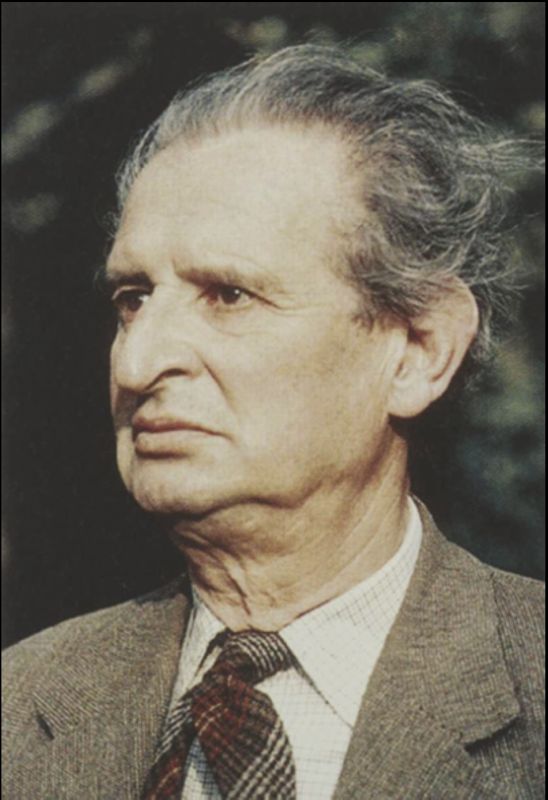
Art dealer Hans Maximilian Calmann was born in 1899 into an upper-middle-class Jewish family in the Free and Hanseatic City of Hamburg, German Empire (now Hamburg, Germany). After studying politics at the University of Munich, he joined the family firm as a stockbroker from 1921 to 1937. Founded by his grandfather in 1853, the company operated across Germany as a Privatbank. During these years, Calmann began buying and occasionally selling art, with his early collecting particularly influenced by ethnographic objects from Africa and the South Seas. He married Käthe Brasch (whose sister married Sigmund Freud’s son, Ernst). The couple had three daughters, Marianne, Susan and Iris. Käthe died tragically at the age of 38 and, in 1934, Calmann married the philosopher, Gerta Hertz (who had grown up between India and Hamburg) and together they had a son, John.
As conditions in Germany worsened, following the rise of Nazism, Calmann considered restarting his career abroad. After a failed attempt to immigrate to Switzerland, the family settled in London, England, having arriving by boat at Harwich in March 1937. Before leaving Hamburg, he sold several pieces of art to finance the move, but retained one prized object: a Roman bronze head of a young athlete from the late first century BC. In 1938, the family firm was forced to close, following the ‘Aryanisation’ of Jewish banks. Six months after arriving in the UK, Calmann opened a small shop in St James’s Place, in the heart of the London art world. Early exhibitions ranged from modern Balinese sculpture to contemporary British artists of the day, such as Duncan Grant and Gwen John. He also showed works by fellow refugees, Tisa Hess (1937), Joseph Oppenheimer and Gerhard Frankl (1938) and Freda Salvendy’s Czechoslovak pictures in 1939. In 1941, after internment as a so-called 'eneny alien' on the Isle of Man, he acquired a larger gallery in 15 Davies Street in Mayfair and began to focus exclusively on Old Master drawings. In 1963, he moved to nearby Bruton Place, where he remained until retirement.
Over four decades as a drawings dealer, Calmann handled more than 2,000 works, advised leading collectors, such as Ian Woodner, Sir Robert Witt and Norman Colville, and Paul Oppe, and helped build major institutional collections. His reputation placed him at the forefront of the market, competing with prestigious British firms such as Colnaghi’s and Agnew’s. He specialised in Old Master drawings, especially Italian, and was known both in Western Europe and North America. His stock books included works by Claude Lorrain, Willem van de Velde, Gabriel de Saint-Aubin, Jacques Callot, Anthony van Dyck, and others. The first important drawing he sold was a preparatory study for one of Jean-Étienne Liotard’s final pastels, depicting the artist’s daughter playing chess with an abbot. Among his proudest rediscoveries was made during a 1952 visit to Wildenstein’s Bond Street gallery, where he recognised a Raphael drawing, misattributed for 30 years, after being dismissed by an American scholar. He bought it for £1,300 and sold it to A. E. Popham, Keeper of Prints and Drawings at the British Museum, for £2,000. Another notable sale was an album of 50 watercolours of flowers, vegetables and fruits by Jacques Le Moyne de Morgues, acquired at auction and sold to the British Museum. During his career, Calmann published five illustrated catalogues.
Calmann’s 1975 letter in the Times offers insight into the refugee art-dealer world in the UK: ‘I belong to that great number of refugee dealers, who were welcomed into this country in the years before the war. I had no connections here, no experience, no money. Times for the art trade were bad, worse than now. I was given encouragement, advice and help and no dealer’s door was closed to me. There are still a good number of my refugee dealer contemporaries alive, who will certainly bear me out in this. In the years since 1937 I have seen a lot of international trade. There is no art market where relations between dealers are better. The London art market has little jealousy and any newcomer, who conforms to the standards and traditions of the trade, will find the doors of his colleagues open to him’ (Calmann, 1975, p. tbc). Nonetheless, the end of his career was somewhat overshadowed by his association with the forger, Eric Hebborn, from whom he had unintentionally purchased fake drawings.
Calmann retired in 1973. In spring 1980, his son John, a successful publisher, was murdered in France by a hitchhiker. Calmann later found solace gardening at his home, Perridge House, in Pilton, Somerset. Hans Maximilian Calmann died at the Nuffield Hospital in Bath, Somerset, England on 20 April 1982, aged 82. In the UK public domain, drawings with his provenance are now held numerous collections, including the British Museum and Fitzwilliam Museum; many others are held in international museum collections. Posthumously, in 2017, a work was presented to the Ashmolean Museum in memory of Hans Calmann and his wife.
Emma Ricci (with Ana-Maria Milčić)
Related books
- Jennifer Tonkovich, 'Hans Calmann and the American Market for Old Master Drawings, 1937–73', Master Drawings, Vol. 59, No. 1, 2021, pp. 49-72
- Charles Reeve, 'Putting the “Lie” in “Line”: Eric Hebborn's Drawn to Trouble', a/b: Auto/Biography Studies, Vol. 33, 2018, pp. 175-187
- Eric Hebborn, The Art Forger’s Handbook (New York: Overlook Books, 1997)
- Per Bjurström, 'Konnässörskapets problematik: Original ‐ imitation ‐ förfalskning', Konsthistorisk tidskrift/Journal of Art History, Vol. 66, 1997, pp. 219-232
- Obituary, The New York Times, Saturday, 8 May 1982
- H. M. Calmann, H. M. Calmann: dealer in old master drawings (London: Calmann, 1976, 1964, 1960, 1958, 1952, 1951, 1950 (and possibly others)
- H. M. Calmann, ‘London Art Market’, The Times, 25 November 1975
- Erika Langmuir, Two Unpublished Drawings by Nicolò dell' Abate, The Burlington Magazine Vol. 117, No. 872, Special Issue Devoted to Nineteenth and Twentieth-Century Art (Nov., 1975), p. 729
- 'Art Notes', 'Gerhard Frankl from Vienna', Jewish Chronicle, 11 November 1938, p. 46
Public collections
Related web links
- Bloomsbury Visual Arts
- Contemporary Art Society
- Erika Langmuir, Two Unpublished Drawings by Nicolò dell' Abate, The Burlington Magazine Vol. 117, No. 872, Special Issue Devoted to Nineteenth and Twentieth-Century Art
- Frick Collection
- Getty
- National Gallery of Art
- Paul Mellon Centre
- Princeton Art Museum
- Restitutions Committee
- The Met
- The Morgan Library & Museum
Selected exhibitions
- Drawn to Greatness: Master Drawings from the Thaw Collection (including works with Calmann's provenance), The Morgan Library & Museum, New York (2017)
Ben Uri archive
Consult items in the Ben Uri archive related to [H. M. Calmann]
Ben Uri library
Publications related to [H. M. Calmann] in the Ben Uri Library