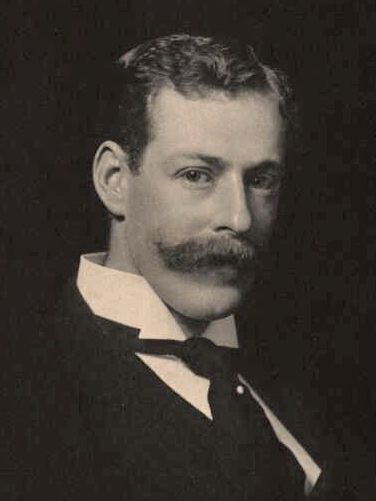
Born: 1862 Melbourne, Australia
Died: 1934 Nice, France
Year of Migration to the UK: 1897
Other name/s: Henry Walter Barnett, The Antipodean
Biography
Photographer Henry Walter Barnett, known professionally as H. Walter Barnett, was born on 25 January 1862 at St Kilda, Melbourne, Colony of Victoria, Australia, the son of Lewis Barnett, a merchant, and Alice Barnett, née Jacobs, both London-born Jews. Barnett began his professional work about 1875 as a studio assistant to the Melbourne photographer Robert Stewart, alongside fellow assistant, Tom Roberts, who became a lifelong friend. In 1883 he set up the Elite Studio in Hobart, Tasmania, in partnership with Harold Riise, but the partnership was dissolved within months, and he travelled to gain further experience, working for Isaiah West Taber in San Francisco, USA and for the society photographers W. and D. Downey in London. Returning to Australia in late 1886, he took over a Sydney studio, quickly building a reputation as one of the country's foremost portrait photographers. His sitters included Robert Louis Stevenson in 1890, Sarah Bernhardt in 1891 and Mark Twain in 1895. On 18 July 1889 he married Hilda Frances Clement ('Ella') Forbes in Sydney. Following a brief but historically significant collaboration with the French cinematograph operator Marius Sestier, whose films of the 1896 Melbourne Cup Barnett helped stage, he left Adelaide on 1 February 1897 for London, immigrating permanently to Britain to establish himself among its foremost portrait photographers.
Barnett worked almost exclusively in portraiture, producing finely finished platinotype prints on flexible vellum mounts that contemporaries likened to mezzotint engravings. His technique was distinguished by an unusually thorough process of multiple sittings and a particular skill in rendering bone structure and skin texture, qualities that, alongside his contemporary E.O. Hoppé, made him one of the most significant portrait photographers of Edwardian London. In 1899 he was elected to The Linked Ring, London's photo-secessionist society, adopting the pseudonym 'The Antipodean', a label that pointed self-consciously to his Australian origins, even as he worked at the centre of British photography. His sitters extended beyond royalty, aristocrats and politicians to include fellow artists, among them Auguste Rodin, and he maintained close friendships with expatriate Australian painters, Arthur Streeton and Tom Roberts; the former judged Barnett to have a 'good, strong appreciation for the beautiful' (De Serville, 1979). This combination of documentary commercial practice with self-conscious artistic ambition, rooted in a colonial identity reworked within a British institutional and social milieu, characterised his practice throughout his career.
Barnett opened his first London studio at Hyde Park Corner in May 1898, having already received the premier medal for portraiture at the Royal Photographic Society's 1897 exhibition for his studies of Henri Kowalski, Sir Henry Parkes and John Tanner. By 1903 he had relocated to larger premises in Knightsbridge, from where he photographed members of the royal family, including King George V and Queen Mary, alongside leading figures of Edwardian and interwar society. In 1901 he co-founded the Professional Photographers' Association, and in 1903 his work was shown alongside that of other leading British portrait photographers at the Photographic Convention of the United Kingdom's exhibition in the Sandeman Gallery, Perth, Scotland. In 1908 his professional portraiture, together with two colour autochrome studies, was shown at the Royal Photographic Society's annual exhibition at the New Gallery, Regent Street, where the autochromes drew particular praise. During the First World War he mounted a London exhibition of his portraits of British, Dominion and Allied servicemen and women, titled Warriors All (1917).
In 1920 Barnett sold his London business and left Britain, settling first at Dieppe, France and later travelling between Paris, Italy and the South of France. He turned increasingly to collecting and dealing in contemporary French art, and in 1927 organised an exhibition of modern French painting at the Fine Art Society's galleries in Melbourne. In 1933 he published a pamphlet in Paris criticising the trustees of the Felton Bequest for favouring old masters over contemporary French art.
Barnett died on 16 January 1934 in Nice, France. His negatives, preserved on varnished glass, were still in perfect condition decades later, forming what one obituarist called a library of photographs illustrating the development of style and technique in British portrait photography. Posthumously, his work has continued to be exhibited, notably in the National Portrait Gallery's High Society: Photographs 1897-1914 in 1998 and in its dedicated display H. Walter Barnett: Women of Note in 2010–11. In the UK public domain his work is represented in collections including the National Portrait Gallery and the Victoria and Albert Museum, London.
The Ben Uri Research Unit welcomes contributions from researchers or family members who may have further biographical information.
Michal Mel
Related books
- Tony Martin-Jones, 'Henry Walter Barnett: A Summary Biography' (Sydney: self-published online, 2024)
- National Portrait Gallery of Australia, 'H. Walter Barnett, b. 1862' (Canberra: National Portrait Gallery of Australia, 2021)
- Stephen Herbert and Luke McKernan (eds.), Who's Who of Victorian Cinema: (London: self-published online, rev. 2010)
- Victoria and Albert Museum, object record for 'Portrait of Two Ladies', accession E.890-1997 (London: Victoria and Albert Museum, 2008)
- Terence Pepper, High Society: Photographs 1897-1914, Exhibition catalogue (London: National Portrait Gallery, 1998)
- 'Don't Miss', The Times, 7 February 1998, p. 43 Dalya Alberge, 'Negatives Cast Light on Long-Lost High Life', The Times, 19 January 1998, p. 9
- Paul H. De Serville, 'Barnett, Henry Walter (1862-1934)', in Australian Dictionary of Biography, Volume 7 (Melbourne: Melbourne University Press, 1979)
- Henry Walter Barnett, A Protest Against the Maladministration of the Beneficent Public Trust Known as the Felton Bequest (Paris: privately published, 1933)
- 'The Royal Photographic Society's Exhibition', The Times, 16 September 1908, p. 7
- 'Well Done, Perth!', Evening Telegraph (Dundee), 9 July 1903, p. 3
Public collections
Related organisations
- Association of Photographers (co-founder)
- Royal Photographic Society (member)
- The Linked Ring Brotherhood (member)
Related web links
- Australian Dictionary of Biography
- National Portrait Gallery, London
- National Portrait Gallery of Australia
- Tony Martin-Jones' film history notes, apex.net.au
- Victoria and Albert Museum
- Who's Who of Victorian Cinema
Selected exhibitions
- H Walter Barnett: Women of Note, National Portrait Gallery, London (2010-11)
- Legends: The Art of Walter Barnett 1862-1934, National Portrait Gallery of Australia, Canberra, Australia (2001)
- High Society: Photographs 1897-1914, National Portrait Gallery, London (1998)
- Exhibition of modern French art, Fine Art Society, Melbourne, Australia (1927)
- Warriors All, H. Walter Barnett & Co., London (1917)
- Royal Photographic Society annual exhibition, New Gallery, London (1908)
- Photographic Convention of the United Kingdom, professional exhibition, Sandeman Gallery, Perth, Scotland (1903)
- Royal Photographic Society annual exhibition (awarded premier medal for portraiture), London (1897)