Born: 1905 Morlaix, France
Died: 1983 Chipping Norton, England
Year of Migration to the UK: 1950
Biography
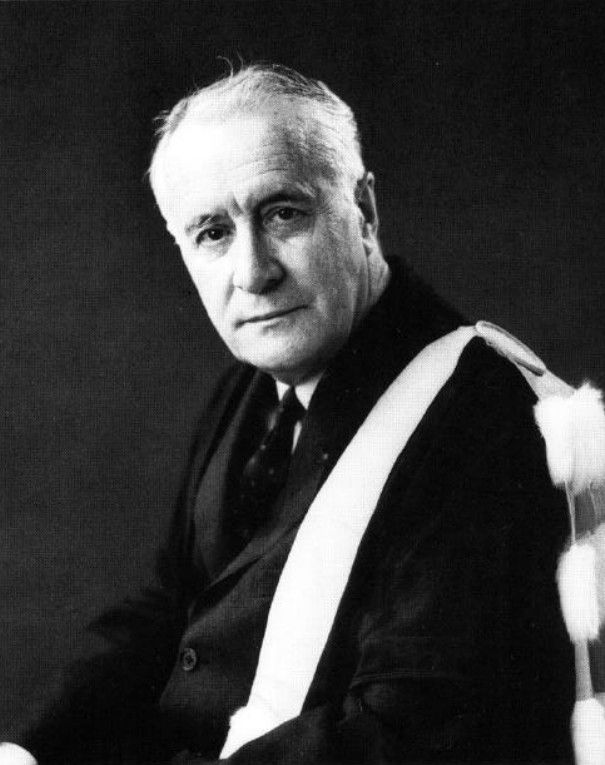
Art historian and scholar Jean Seznec was born on 18 March 1905 in Morlaix, France, into a Breton family with farming origins. His parents, Jean Seznec and Pauline Le Férec, were both primary schoolteachers. Following his mother’s death in childbirth, he was brought up largely by his grandmother. Educated at the Lycée in Rennes and subsequently in Paris, he developed an early interest in drawing and considered becoming a painter. He entered the École normale supérieure in 1925, where his contemporaries included Jean-Paul Sartre and Raymond Aron, and he passed the agrégation, France’s competitive examination for secondary-school teaching, in 1928.
Between 1929 and 1931, Seznec studied at the École française de Rome, where the art historian Émile Mâle became an important intellectual influence. Seznec's growing interest in iconography and the relationship between literature and the visual arts brought him into contact with Fritz Saxl and the Warburg Institute, whose scholarship on the survival of classical antiquity profoundly shaped his research. After lecturing in French literature at Cambridge University (1931–33), he taught at the Lycée Thiers in Marseilles (1933–34). He subsequently joined the French Institute in Florence (1934–39), becoming assistant director in 1938. During these years he developed the research that culminated in La Survivance des dieux antiques (1940), an ambitious examination of the transmission and transformation of classical mythology in European art and literature, from the Middle Ages to the Renaissance. Published by the Warburg Institute in London, although its distribution was delayed by the Second World War, La Survivance des dieux antiques established Seznec’s international reputation and earned him the Prix Fould from the French Académie des Inscriptions et Belles-Lettres in 1948. Drawing on the approaches of Aby Warburg, Saxl and Erwin Panofsky, while incorporating extensive original research, Seznec demonstrated how pagan gods survived through changing religious, literary and artistic traditions. The book appeared in English as The Survival of the Pagan Gods (1953) and was subsequently translated into several other languages.
With the outbreak of the Second World War, Seznec was mobilised in 1939 and served as a lieutenant in the French Chasseurs Alpins until the 1940 armistice. In 1941, he travelled with his family to the United States, joining Harvard University's Department of Romance Languages and Literatures. Appointed full professor in 1946, he became departmental chairman in 1949. During his American years, he collaborated with Elizabeth Mongan and Philip Hofer on Fragonard Drawings for Ariosto (1945), identifying previously unpublished drawings illustrating Ariosto’s Orlando Furioso.
In 1950, Seznec succeeded Gustave Rudler as Marshal Foch Professor of French Literature at the University of Oxford, a position he retained until his retirement in 1972. Attached to All Souls College, he became an influential participant in Oxford’s intellectual life, organising research seminars, lecturing at the Ashmolean Museum and supporting the development of art-historical scholarship. He helped secure the appointment of German emigre, Edgar Wind, as Oxford’s first professor of art history in 1955. Although principally a scholar of French literature, Seznec consistently explored the reciprocal influences of artistic and literary expression, publishing studies of Flaubert, Michelet, Chateaubriand, Renan, Proust and Diderot. His research on Flaubert included Les Sources de l'épisode des dieux dans la Tentation de saint Antoine (1940) and Nouvelles études sur La Tentation de saint Antoine (1949), which traced the literary and visual sources informing the novelist’s treatment of religious mythology. Seznec’s other major scholarly achievement was his critical edition, initially undertaken with Jean Adhémar, of Denis Diderot’s Salons, published in four volumes by the Clarendon Press between 1957 and 1967. Combining textual scholarship, extensive annotation, exhibition catalogues and photographic documentation, the edition identified numerous artworks discussed by Diderot and substantially transformed the study of eighteenth-century French art criticism. His Essais sur Diderot et l’Antiquité (1957) further explored the intellectual relationship between Enlightenment philosophers and antiquarian scholarship. Seznec maintained extensive international academic connections, holding visiting appointments at universities in Europe and the United States. Elected a Fellow of the British Academy in 1960, he also received honorary doctorates from Harvard and St Andrews University, and held a number of French honours, including the Légion d’honneur, commander of the Ordre national du Mérite, and the Prix du Rayonnement Français.
Following his retirement, Seznec continued researching and preparing a revised edition of Diderot’s Salons. His later interests increasingly concerned the revival of classical and Egyptian mythology in nineteenth-century art and literature. In 1978, he delivered six Messenger Lectures at Cornell University, New York, USA, entitled ‘Revival and Metamorphoses of the Gods in Nineteenth-Century Art and Literature’. Seznec's scholarly achievements were recognised through two collections of essays in his honour, The Artist and the Writer in France (1974) and Patterns of Inquiry (1975–76), the latter published as a special double issue of Nineteenth-Century French Studies. Jean Seznec died in Chipping Norton, Gloucestershire, England on 21 November 1983. In the UK public domain his unpublished manuscripts for ‘Revival and Metamorphoses of the Gods in Nineteenth-Century Art and Literature’ are held at the University of Oxford’s Taylor Institution Library.
Irene Iacono
Related books
- Marie Tchernia-Blanchard, ‘Résonances warburgiennes en France dans les années 1930: La survivance de l’antique chez Jean Adhémar et Jean Seznec’, Images Re-vues, Hors-série 4, Survivance d'Aby Warburg, 2013
- Michael Sheringham, ‘Seznec, Jean Joseph (1905–1983)’, Oxford Dictionary of National Biography, Oxford University Press (2011)
- Elizabeth Sears, ‘Seznec, Saxl and La Survivance des dieux antiques’, in Rembrandt Duits and François Quiviger eds., Images of the Pagan Gods: Papers of a Conference in Memory of Jean Seznec (London: Warburg Institute, 2009), pp. 3-20
- R.F., ‘Jean Seznec (1905–1983)’, French Studies, Vol. 38, No. 4, 1984, pp. 505–506
- ‘Professor Jean Seznec’, The Times, 22 November 1983, p. 14
- Thomas H. Goetz ed., Patterns of Inquiry: Essays in Honor of Jean Seznec, Nineteenth-Century French Studies, Vol. 4, Nos. 1–2, Fall–Winter 1975–1976
- Jean Adhémar, ‘A Personal Postscript’, in in Francis Haskell, Anthony Levi, and Robert Shackleton eds., The Artist and the Writer in France: Essays in Honour of Jean Seznec (Oxford: Clarendon Press, 1974), pp. 173–7
- Francis Haskell, Anthony Levi and Robert Shackleton eds., The Artist and the Writer in France: Essays in Honour of Jean Seznec (Oxford: Clarendon Press, 1974)
- Jean Seznec, ‘Art and Literature: A Plea for Humility’, New Literary History, Vol. 3, No. 3, Spring 1972, pp. 569–574
- Denis Diderot, Salons, edited by Jean Seznec and Jean Adhémar, 4 vols. (Oxford: Clarendon Press, 1957–1967)
- Jean Seznec, ‘Diderot and Historical Painting’, in Earl R. Wasserman ed., Aspects of the Eighteenth Century (Baltimore: Johns Hopkins Press, 1965), pp. 129–142
- Jean Seznec, Essais sur Diderot et l’Antiquité (Oxford: Clarendon Press, 1957)
- Jean Seznec, The Survival of the Pagan Gods (New York: Pantheon Books, 1953)
- Jean Seznec, Diderot and Le Génie du Christianisme’, Journal of the Warburg and Courtauld Institutes, Vol. 15, Nos. 3–4,1952, pp. 229–241
- Herbert Dieckmann and Jean Seznec, ‘The Horse of Marcus Aurelius: A Controversy between Diderot and Falconet’, Journal of the Warburg and Courtauld Institutes, Vol. 15, Nos. 3–4, 1952, pp. 198–228
- Jean Seznec, ‘Voltaire and Fragonard: Notes on a Legend’, Journal of the Warburg and Courtauld Institutes, Vol. 10, 1947, pp. 109–113
- Jean Seznec, ‘Flaubert and the Graphic Arts’, Journal of the Warburg and Courtauld Institutes, Vol. 8, 1945, pp. 175–190
- Jean Seznec, ‘Flaubert and India’, Journal of the Warburg and Courtauld Institutes, Vol. 4, nos. 3–4, 1942, pp. 142–150
- Jean Seznec, Les Sources de l'épisode des dieux dans La Tentation de saint Antoine (Paris: Librairie Philosophique J. Vrin, 1940)
- Jean Seznec, La Survivance des dieux antiques: essai sur le rôle de la tradition mythologique dans l'humanisme et dans l'art de la Renaissance (London: The Warburg Institute, 1940)
- Jean Seznec, ‘Youth, Innocence and Death: Some Notes on a Medallion on the Certosa of Pavia’, Journal of the Warburg Institute, Vol. 1, No. 4, 1938, pp. 298–303
- Jean Seznec, Apollo and the Swans on the Tomb of St. Sebaldus’, Journal of the Warburg Institute, Vol. 2, No. 1, 1938, p. 75
- Jean Seznec, ‘La Mascarade des dieux à Florence en 1565’, Mélanges d’archéologie et d’histoire, Vol. 52, 1935, pp. 224–243
- Jean Seznec, ‘Érudits et graveurs au XVIe siècle’, Mélanges d’archéologie et d’histoire, Vol. 47, 1930, pp. 118–137
Related organisations
- American Academy of Arts and Sciences (member)
- British Academy (Fellow)
- École Française de Rome (student)
- École Normale Supérieure, Paris (student)
- Harvard University (professor)
- Institut Français de Florence (lecturer)
- Medieval Academy of America (member)
- Sorbonne University (student)
- University of Cambridge (lecturer)
- University of Oxford (professor)
- Warburg Institute, London (lecturer and researcher)
Related web links
- Elizabeth Sears, ‘Six Unpublished Lectures by Jean Seznec’, Taylor Institution Library
- Ianick Takaes de Oliveira, ‘’Il y a un sort de revenant’ A Letter-Draft from Edgar Wind to Jean Seznec’, Summer 1954
- Lee Sorensen, ‘Seznec, Jean’, Dictionary of Art Historians
- ‘Seznec, Jean’, Annuaire des Anciens Membres de l'École Française de Rome, p. 161
Ben Uri archive
Consult items in the Ben Uri archive related to [Jean Seznec]
Ben Uri library
Publications related to [Jean Seznec] in the Ben Uri Library