Born: 1926 Ludza, Latvia
Died: 1980 England
Year of Migration to the UK: 1947
Other name/s: Niklo de Martell
Biography
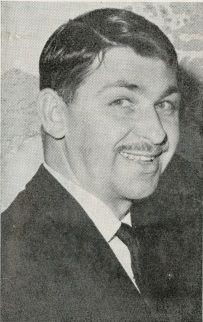
Painter and graphic artist Nikolajs Soikans was born on 9 September 1926 in Ludza, Latvia. His father Jezups was a cultural historian and publicist, and his mother Olga (née Tabulēviča) had studied painting at the Academy of Arts in St Petersburg in Russia; his older brother Juris was a painter. Soikans studied at the gymnasium in Rēzekne under the painter Jānis Gailis, and later in Riga under Jānis Kalmīte; he additionally received guidance from the wood engravers, Jānis Plēpis and Aleksandrs Junkers. The outbreak of the Second World War interrupted his studies, and Soikans was conscripted into the Latvian Legion. He served as a frontline reporter, and at the end of the war found himself displaced, ending up at the Lübeck Displaced Persons (DP) camp in Germany, where he worked in the workshop of the theatre director Fricis Milts as a decorator's assistant and made early urban sketches in charcoal.
Soikans immigrated to the UK in 1947 under the Westward Ho! European Volunteer Workers scheme, settling in Leicester, England. He received a professional diploma in export and international trade from the Institute of Export in 1954 and worked at Caterpillar's Leicester branch (a leading manufacturer of mining and construction equipment), eventually becoming head of the company's transport division across Europe. He married Olga (née Pundiks), with whom he had a son, Juris. In tandem with his regular employment, Soikans worked as an artist across linocut, woodblock printing, oil painting, and palette-knife technique, using printer's ink on textured paper, which he adopted in the early 1960s following his brother Juris's example and to which he later introduced his own innovations in colour. His early graphic output, produced in Rochdale, Lancashire and signed with the pseudonym, Niklo de Martell, focused on the declining industrial environment of northern English mill towns. Over the following decade his work expanded thematically to address the Latvian wartime experience, Soviet occupation, and the condition of the political exile. During the 1960s, his practice shifted towards semi-abstract treatments of the urban landscape, rendered primarily in the palette-knife technique. A critic writing in Londonas Avīze described his prints in the Res humanae portfolio (1966) as 'possessing a sculptural quality, noting that the figures convey a sense of surrounding space and atmosphere, and that the varied surface treatment often recalls the impression of a lithograph stone' (Londonas Avīze, 10 February 1967). The art critic Margarita Ausala, reviewing his 1969 solo exhibition at Vaughan College, Leicester, described his pictorial approach as intellectually constructed, with colour distribution, division, and line pattern governed by a mathematical precision, comparing compositional effects in his works to those of cathedral stained glass (Londonas Avīze, 14 November 1969). In his later career, Soikans moved towards large-format landscape paintings with elevated viewpoints, executed in oils with the palette knife, characterised by broad expanses of light and an open horizon.
Soikans was among the most prolific exhibitors in the Latvian exile community in Britain. He released 11 portfolios of graphic work over the course of his career. His first two linocut portfolios, issued in 1952 and 1953, depicted workers in a declining industrial English town. The linocut and woodblock portfolio Ciešanu laiks (Times of Suffering, 1954) addressed the Soviet occupation of Latvia and the refugee experience. The 1955 portfolio Akmens sprostā (In a Stone Trap) presented 13 prints depicting a young exile during the Westward Ho! labour scheme. The major portfolio, Izstumtie (The Outcasts, Venta Press, 1965; second edition Gersika Press, 1977), a collection of linocuts and woodblock prints dating from 1948 to 1954, was recognised as a significant document of the Baltic displaced persons experience in Britain. The palette-knife portfolio, Abstraktas impresijas (Abstract Impressions, 1964) marked his adoption of the new technique, and Res humanae (Human Affairs, 1966) presented a series of monochrome, vertical figure compositions addressing the full range of human experience.
As a member of the Leicester Society of Artists, Soikans participated in exhibitions in Britain, Germany, and the United States, with solo exhibitions held at Vaughan College, Leicester (1968, 1969), the Latvian Association Hall in London (1967), and Leighton House Gallery, London (1977) with Juris Soikans, as part of the programme of the Fourth European Latvian Song Festival. He was awarded first prize in the art exhibition of the Latvian Song Festival in Toronto, Canada in 1965. He also exhibited work at Straumēni, the Daugavas Vanagi property in England (1977). Soikans was elected chairman of the British Latvian Association of Artists and Applied Artists in 1964.
Nikolajs Soikans died in Leicester, England on 21 February 1980. It is not known whether his works are held in any public collections in the UK.
The Ben Uri Research Unit welcomes contributions from researchers or family members who may have further biographical information. Nikolajs Soikans was the subject of a research paper presented by Andra Silapētere (Latvian Centre for Contemporary Art) at Ben Uri's symposium, Metropolitan Crossings: Art, Displacement, and the Making of Modern London (1930s–1970s), held in November 2025.
Michal Mel
Related books
- Jānis Andrups, 'Dzīves un Darba Varonība', Londonas Avīze, 7 March 1980
- Nikolāja Soikana Izstāde "Straumēnos", Londonas Avīze, 16 September 1977
- Laimonis Mieriņš, 'Brāļu Soikānu Gleznu Izstāde', Londonas Avīze, 5 August 1977
- A., 'Anglijas latviešu Gaitu Dokumentējums Attēlos', Londonas Avīze, 15 July 1977
- R. M., 'Bold Attempt to Get Away From ‘Pretty' Pictures, Leicester Daily Mercury, Friday 22 January 1971, p 20
- Margarita Ausala, 'Krāsu un Līniju Audējs', Londonas Avīze, 14 November 1969
- 'Pilsētu un Mašīnu Gleznotājs', Londonas Avīze, 9 August 1968
- 'Nikolaja Soikana Gleznu Izstāde Lesterā', Londonas Avīze, 7 June 1968
- Margarita Ausala, 'Telpa un Plakne', Londonas Avīze, 13 October 1967
- Ēriks Žilinskis, 'Nikolaja Soikana Izstāde', Londonas Avīze, 10 March 1967
- R., 'Nikolaja Soikana Darbu Mape', Londonas Avīze, 10 February 1967
- Ēriks Žilinskis, 'Nikolaja Soikana Grafiku Krājums "Izstumtie"', Londonas Avīze, 23 April 1965
- Nikolājs Soikans, Abstract Expressions: In Printing Ink: With Japanese Pallet Knife. [N.P] (1964)
- R. A., 'Nikolaja Soikana Melnbaltie Zīmējumi', Londonas Avīze, 17 April 1964
Public collections
Related organisations
- British Latvian Association of Artists and Applied Artists (Chairman)
- Leicester Society of Artists (member)
Related web links
- Ben Uri symposium, Metropolitan Crossings: Art, Displacement, and the Making of Modern London
- Changing Identities
- Eiropas Latviešu Dziesmu Svētki
- Latvijas Vēstnesis
- Ludzas Novada Bibliotēka
Selected exhibitions
- Solo exhibition, Straumeni, Daugavas Vanagi property, Sunningdale, Berkshire (1977)
- Juris and Nikolajs Soikans, Leighton House Gallery, London (1977)
- Solo exhibition, Vaughan College, Leicester (1968, 1969)
- Solo exhibition, DVF Hall, London (1967)
- Joint exhibition with Rezija Andrupe, Porchester Hall, London (1967)
- Solo Exhibition, Estonian Club, Leicester (1965)
- Art exhibition, Latvian Song Festival, Toronto, Canada (1965)
Ben Uri archive
Consult items in the Ben Uri archive related to [Nikolājs Soikans]
Ben Uri library
Publications related to [Nikolājs Soikans] in the Ben Uri Library